mwcgk2@gmail.com S-Block, Gurudwara Nanaksar Premises, Greater Kailash-II, New Delhi-48

mwcgk2@gmail.com S-Block, Gurudwara Nanaksar Premises, Greater Kailash-II, New Delhi-48
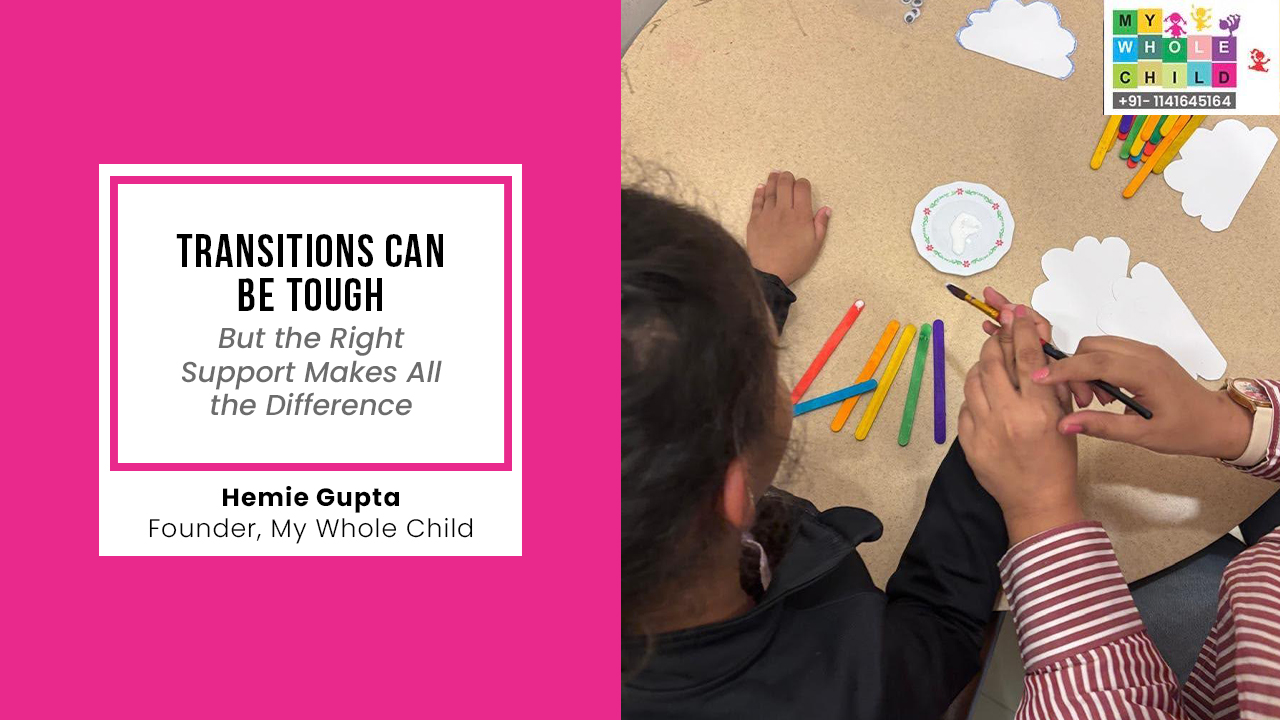
The start of a new academic session in a mainstream school is a significant transition for children. Whether it’s entering school for the first time, moving to a new grade, or adjusting to a different classroom environment, these changes can feel both exciting and overwhelming.
From a psychological perspective, transition difficulties during this phase are not simply “behavioural issues”. They are often linked to a child’s developing ability to manage emotions, cope with uncertainty and adapt to new expectations. A child who resists going to school, becomes anxious, or shows changes in behaviour is often communicating a need for support—not discipline.
Mainstream school environments bring multiple adjustments—new teachers, unfamiliar peers, structured routines, and increased academic demands. For many children, especially those who require additional support, these changes can heighten feelings of anxiety and reduce their sense of control.
Predictability and preparation play a crucial role in easing this transition. Familiarizing children with the school environment, discussing what their day will look like, and gradually introducing routines before the session begins can help build a sense of readiness. Simple strategies like visual schedules, countdowns, and consistent morning routines can make a meaningful difference.
Equally important is emotional validation. Acknowledging a child’s worries—whether about making friends, meeting teachers, or managing classroom tasks—helps them feel understood. When children feel heard and supported, they are more likely to approach new situations with confidence.
Collaboration between parents, teachers, and therapists is essential during this time. Consistent strategies across home and school create a stable support system, allowing children to adjust more smoothly and feel secure in their new environment.
Ultimately, transitioning into a mainstream school is not just an academic shift—it is an emotional and social adjustment. With patience, preparation, and the right support, children can build resilience and step into the new academic year with confidence and a sense of belonging.

©2024 My Whole Child. All rights reserved