mwcgk2@gmail.com S-Block, Gurudwara Nanaksar Premises, Greater Kailash-II, New Delhi-48

mwcgk2@gmail.com S-Block, Gurudwara Nanaksar Premises, Greater Kailash-II, New Delhi-48
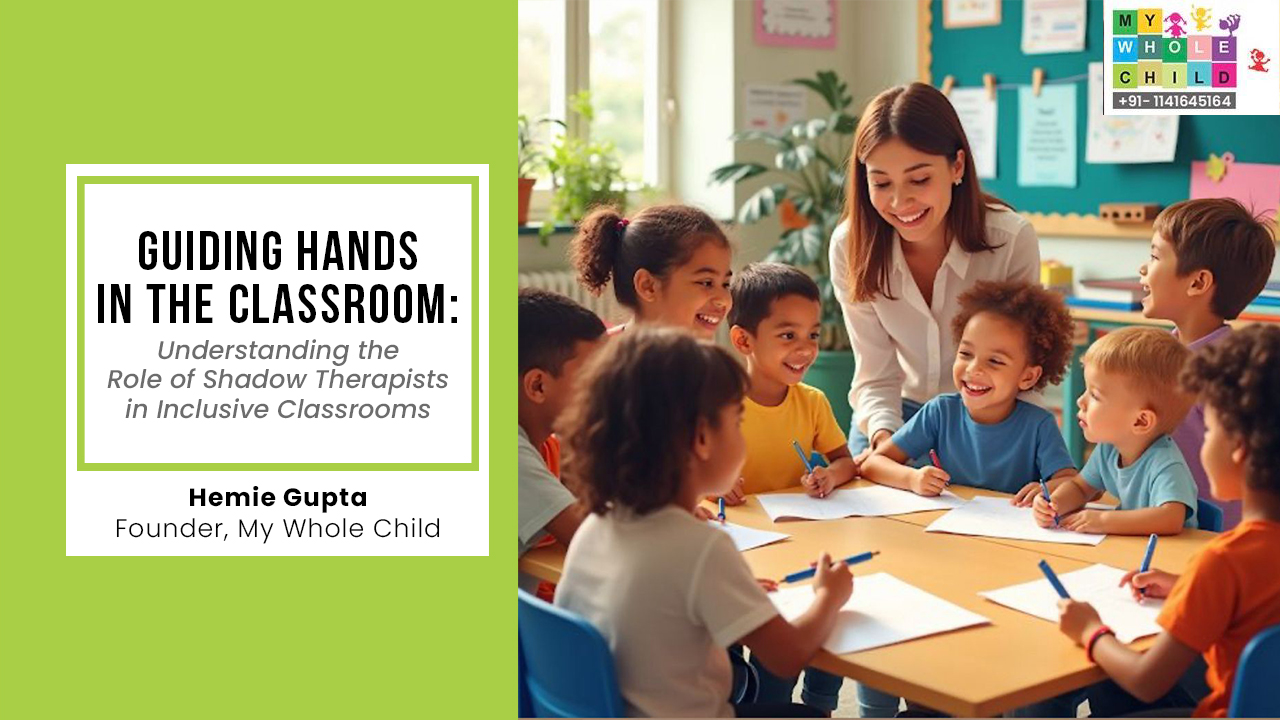
Inclusive education has created opportunities for many children to learn and grow in mainstream classrooms. For some, however, adjusting to the pace, expectations, and social demands of school can be a challenging task. This is where in-class support professionals play an important role. Traditionally, this support has been provided by shadow teachers, sometimes called learning support assistants or classroom companions. More recently, another approach has emerged: the shadow therapist, also referred to as a therapeutic shadow or therapy-trained classroom aide. Today, however, schools and families are recognizing the need for a more specialized form of support: the shadow therapist.
A shadow therapist, sometimes referred to as a therapeutic shadow or therapy-trained classroom aide, is a professional with a background in occupational therapy, psychology, or a related therapeutic discipline. While they assist children in the classroom like shadow teachers, their scope of work goes deeper. Shadow therapists focus not only on what a child is learning, but also on how the child processes, regulates, and responds to their environment.
This means they can:
-Address challenges with attention, sensory processing, or self-regulation directly in the moment.
-Apply therapeutic strategies that reduce barriers to learning.
-Support emotional well-being and social skills alongside academics.
-Collaborate with parents, teachers, and therapy teams to ensure continuity across home, school, and therapy sessions.
-Gradually reduce dependence, helping the child move toward greater independence.
-Because of their training, shadow therapists can combine academic assistance with therapeutic intervention, providing a holistic form of support.
The presence of a shadow therapist ensures that learning challenges are not just managed, but addressed at their root. For example, a child struggling with focus might receive sensory strategies during class, or a child experiencing social anxiety may be guided through evidence-based coping techniques. These interventions happen seamlessly within the classroom, allowing the child to learn alongside peers without interruption.
As inclusive education continues to evolve, shadow therapists represent a step forward in creating classrooms that nurture the whole child academically, emotionally, and socially. Their role underscores the importance of integrating education with therapeutic insight, ensuring that children are not only supported but also empowered to thrive


©2024 My Whole Child. All rights reserved