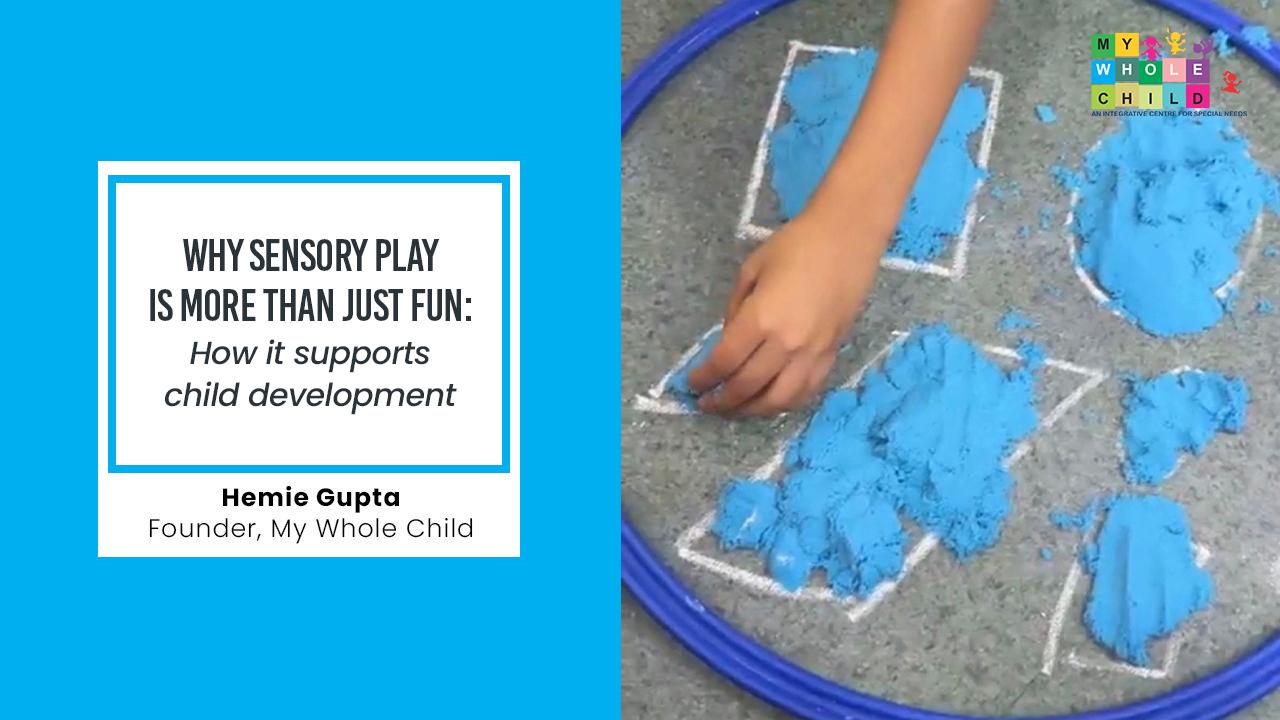
Have you ever watched a child happily splash water, squish play dough, or get completely absorbed in a tray full of sand? To adults, it may look like simple play, but for children, these moments are filled with learning, growth, and discovery.
Sensory play is often associated with fun and messy activities—and yes, children absolutely love it! But sensory play is much more than entertainment. It plays an important role in helping children understand their world, develop essential skills, and build confidence in everyday activities.
What Is Sensory Play?
Sensory play includes any activity that engages a child’s senses—touch, sight, sound, smell, taste, movement, and body awareness. Whether a child is exploring foam, listening to music, jumping on a trampoline, or feeling different textures, they are using their senses to learn about the world around them.
For children, sensory experiences are one of the primary ways they explore, understand, and make sense of their environment.
Why Is Sensory Play So Important?
It Helps Build Stronger Brains
Every time a child explores a new texture, sound, or movement, their brain is making connections. These connections support learning, memory, problem-solving, and future academic skills.
Simply put, play is one of the most powerful ways children learn.
It Strengthens Motor Skills
Activities such as squeezing play dough, pouring water, picking up small objects, climbing, or balancing help develop both fine and gross motor skills.
These skills are needed for everyday tasks such as writing, buttoning clothes, using utensils, and participating in playground activities.
It Supports Attention and Focus
Many children naturally engage with sensory activities for longer periods of time. Sensory play can help improve attention, increase engagement, and encourage children to stay involved in an activity.
This is especially beneficial for children who find it difficult to sit still or focus on tasks.
It Encourages Communication and Language
Sensory experiences create opportunities for conversation and learning new words.
As children explore, they learn to describe what they feel, see, hear, and experience—whether something is soft, rough, cold, sticky, loud, or smooth. These everyday interactions help build vocabulary and communication skills.
It Helps Children Regulate Their Emotions
Just as adults may find comfort in activities they enjoy, children often use sensory experiences to feel calm, organized, and secure.
Playing with water, squeezing play dough, swinging, or engaging in movement activities can help children manage stress, frustration, and overwhelming emotions.
It Builds Confidence
There is no “right” or “wrong” way to explore during sensory play. Children can experiment, make mistakes, and discover solutions on their own.
This freedom encourages independence, creativity, and self-confidence.
Sensory Play and Children with Special Needs
For many children with autism, ADHD, sensory processing difficulties, developmental delays, or other special needs, sensory play can be especially valuable.
These children may experience the world differently and sometimes struggle to process sensory information. Sensory activities provide a safe and enjoyable way to explore different sensations while developing skills such as attention, self-regulation, motor coordination, and social interaction.
This is one of the reasons occupational therapists often incorporate sensory-based activities into therapy sessions.
Simple Sensory Activities You Can Try at Home
- Water play: Water play with cups and spoons can help develop hand-eye coordination and creativity.
- Foam play: Foam play encourages exploration of different textures while making learning fun.
- Rice or bean sensory bins: These activities support tactile exploration and fine motor development.
- Play dough activities: Play dough strengthens hand muscles needed for writing and self-care tasks.
- Bubble play: Bubble play helps improve visual tracking, coordination, and attention.
- Finger painting: Finger painting encourages creativity while providing rich sensory experiences.
- Texture hunts: Texture hunts around the house help children become comfortable exploring different materials.
- Simple obstacle courses: Obstacle courses promote balance, coordination, motor planning, and confidence.
The goal isn’t perfection—it’s exploration, fun, and learning.
Final Thoughts
When children engage in sensory play, they aren’t just playing. They are building important skills that support learning, independence, emotional well-being, and overall development.
So the next time your child gets messy with paint, spends twenty minutes pouring water from one cup to another, or digs their hands into a sensory bin, remember: something meaningful is happening. Through play, they are learning about themselves, their environment, and the world around them.
Because sometimes the most important learning doesn’t happen at a desk—it happens through play.